Orthopedics
Osteoporosis: India's Silent Epidemic
Article by Dr. Swapnil Sharma — MBBS, DNB – Ortho
Published · 5 min read · Medically reviewed
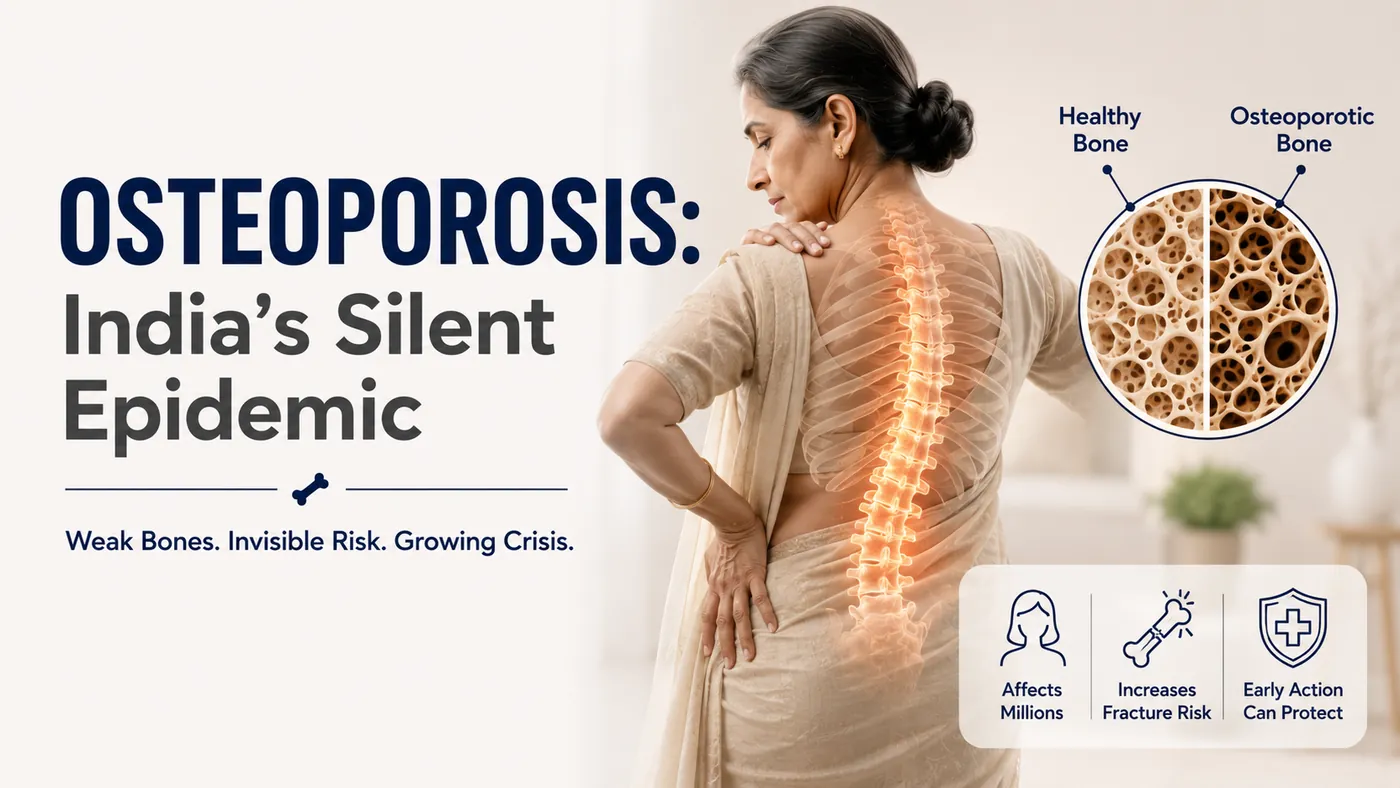
Understanding how osteoporosis silently weakens bones — and the steps you can take to protect yourself. Includes DEXA scan guidance.
A tight hug, a minor fall, or even a strong cough can result in a painful fracture.
For an estimated 61 crore people in India, this is the silent and often unexpected reality of osteoporosis. This condition systematically weakens bones, frequently going undiagnosed until the first break occurs. Understanding this condition is the first step toward protecting your bone health and ensuring a strong, active future.
What is Osteoporosis?
Osteoporosis is a disease where the density and quality of bones are reduced, leading to a fragile skeleton. Healthy bones have a dense, honeycomb-like internal structure. In an osteoporotic bone, the spaces in this structure become larger, compromising its strength. This internal weakness is osteoporosis at its core, significantly increasing the risk of fractures, especially in the hip, spine, and wrist.

India's Unique Challenge
The burden of osteoporosis in India is substantial and presents unique challenges. One in three women and one in eight men in India are affected by osteoporosis. Critically, the onset of osteoporosis in Indians can occur 10 to 20 years earlier than in Western populations. Several nationwide factors contribute to this vulnerability.
- Widespread Vitamin D Deficiency: Despite ample sunshine, an epidemic of Vitamin D deficiency exists, with a prevalence of 70% to 100% in the general population. This is a major concern, as Vitamin D is essential for the body to absorb calcium.
- Inadequate Calcium Intake: The average dietary calcium intake in India is only around 429 mg per day, which is significantly below the recommended 800–1000 mg per day. This long-term dietary gap contributes directly to lower bone mass.
- Genetic Factors: Indians may have a genetically lower peak bone mass compared to people in Western countries, providing a lower baseline of bone strength from the start.
Signs and Symptoms of Osteoporosis
In its early stages, there are often no noticeable osteoporosis symptoms. However, as bones become weaker, the following signs and symptoms of osteoporosis may appear.
- Persistent back pain, often caused by a fractured or collapsed vertebra.
- A gradual loss of height over time.
- The development of a stooped or hunched posture.
- A bone that fractures much more easily than expected.
Causes of Osteoporosis
The primary cause is an imbalance in the natural cycle of bone renewal. The body continuously removes old bone and replaces it with new bone. After our early 30s, the rate of bone loss begins to exceed the rate of bone formation. In women, this process accelerates dramatically after menopause due to a sharp decline in estrogen. Other significant risk factors include a family history of the disease, a sedentary lifestyle, smoking, excessive alcohol consumption, and certain medical conditions that interfere with bone health.
Diagnosis and Treatment
Because of its silent nature, proactive diagnosis is essential. The gold standard for diagnosing osteoporosis is the Dual-Energy X-ray Absorptiometry (DEXA) scan. This simple, painless test accurately measures your bone mineral density, allowing specialists to assess your fracture risk. Fortunately, a comprehensive osteoporosis treatment plan can effectively manage the condition. The cornerstone of treatment of osteoporosis is to slow bone loss and strengthen existing bone to prevent fractures.
Your bones are the framework of your life. Understanding the risks associated with osteoporosis is the first step toward building a stronger, healthier future. If you are concerned about your bone health or have any risk factors, schedule a consultation with a dedicated specialist.
Frequently Asked Questions
What is osteoporosis and why is it called silent?
It is progressive loss of bone density and quality, leaving bones fragile and prone to fracture. It is called silent because there are usually no symptoms until a bone breaks — often the wrist, hip or spine — sometimes after only a minor fall or, in the spine, no obvious injury at all.
Who should get a bone density (DEXA) scan?
Generally women over 65 and men over 70; postmenopausal women and older men with additional risk factors; anyone who fractures after a minor fall; people on long-term steroids; and those with rheumatoid arthritis, thyroid disorders, early menopause or a family history of hip fracture.
How much does a DEXA scan cost?
A DEXA bone density scan at Oxford Hospital is ₹1,200 to ₹2,000 and takes about 20 minutes. It is painless, requires no injection and uses a very low radiation dose.
How much calcium and vitamin D do I need?
Adults generally need around 1,000mg of calcium daily, rising to about 1,200mg for postmenopausal women and older men, alongside adequate vitamin D. Vitamin D deficiency is very common in India despite abundant sunshine, largely due to limited skin exposure — supplementation should be guided by a blood level rather than assumed.
Can osteoporosis be treated?
Yes. Treatment combines calcium and vitamin D sufficiency, weight-bearing and resistance exercise, fall prevention at home, and where indicated prescription medication such as bisphosphonates. Treatment cannot fully restore youthful bone but substantially reduces fracture risk.
Which exercises help protect bone?
Weight-bearing and resistance activity: brisk walking, stair climbing, dancing, and light strength training. Balance work such as tai chi reduces falls, which matters as much as bone density. Anyone with existing spinal fractures should avoid heavy forward bending and twisting, and take individual advice first.
Book a consultation: call +91 98550 00028 or request a callback — our team responds within 1 hour.